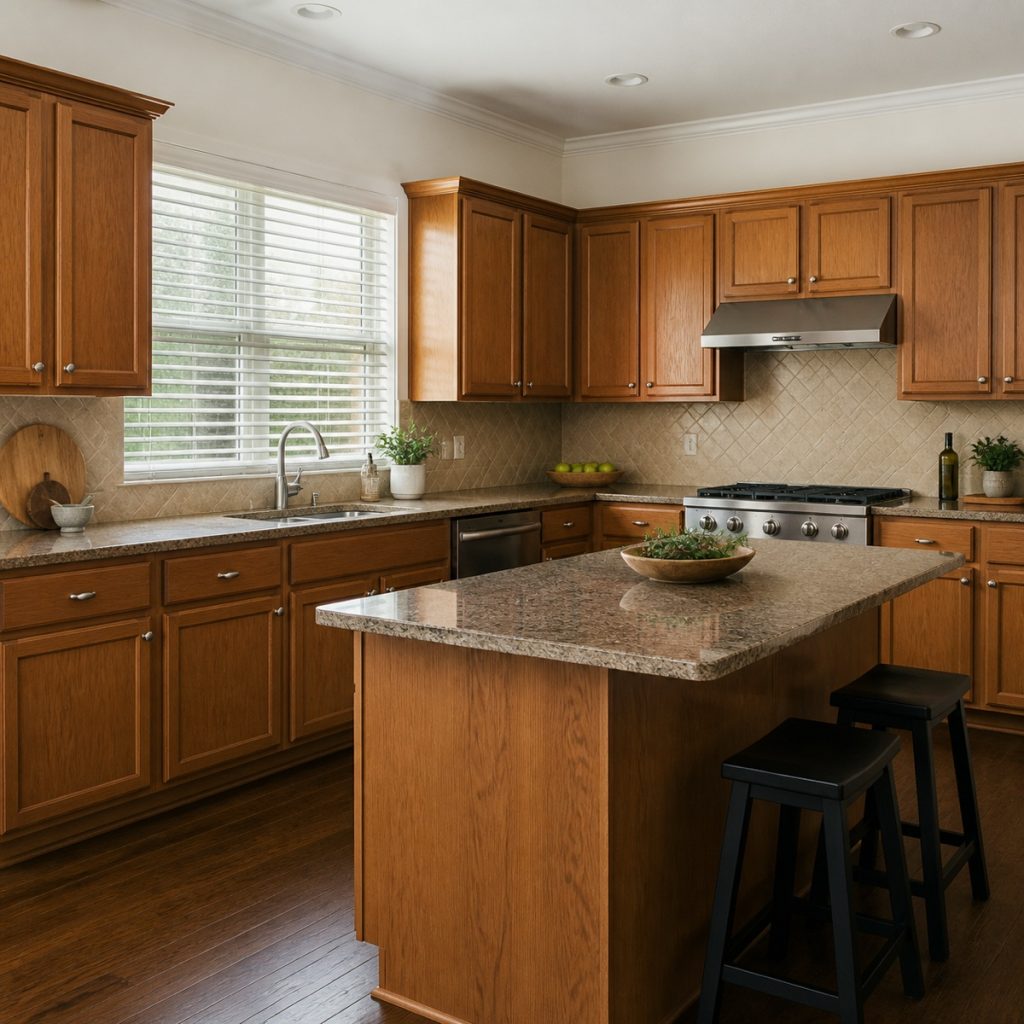
Cabinet planning guide
A cabinet painting estimate should begin with the cabinets, not the paint color. Before recommending refinishing, a professional should evaluate structure, moisture exposure, surface condition, door construction, function, and the homeowner’s finish expectations.
Color is exciting, so it often becomes the first conversation. But a beautiful white, greige, or green cannot correct a swollen sink base, a peeling door skin, a failing drawer box, or a layout that frustrates the household every day. Those conditions change the appropriate scope.
A condition-first assessment does not assume that every flaw requires replacement. It separates cosmetic wear from repairable problems and structural limits. The result should be a proposal that explains what can stay, what needs attention, and what the finish can realistically accomplish.
Start with the cabinet structure
Cabinet boxes should be secure, reasonably square, and capable of supporting normal use. Shelves and cabinet bottoms should not sag under ordinary storage, joints should not be separating, and the face frames or edge construction should remain stable enough for doors and drawers to align.
A loose hinge or worn slide may be a hardware problem rather than a reason to discard the cabinet. A box that has pulled away from the wall or lost strength is a different issue. The assessment should distinguish adjustments and scope-approved repairs from conditions that make refinishing an incomplete answer.
Material matters, but the label alone is not decisive. Plywood, solid wood, MDF, particleboard, and thermofoil components each respond differently to wear, moisture, and finishing. Condition and compatibility matter more than a broad term such as custom or builder-grade.
Look for moisture exposure and material failure
Sink bases, dishwasher ends, trash pullouts, and cabinets near exterior doors often reveal problems that are easy to miss from across the room. Swelling, softened edges, lifted veneer, separating foil, musty odors, and doors that no longer sit square can point to moisture exposure or material breakdown.
Paint can improve and protect a properly repaired, sound surface. It cannot restore strength to material that has lost it. An active leak must also be corrected before finish work begins; otherwise, the same source of damage remains behind the new appearance.
Localized damage does not automatically require replacing every cabinet. The useful question is how far the problem extends and whether the affected component can be repaired or replaced while the surrounding structure remains serviceable.
Appearance is not the condition report
A dated stain can cover sound cabinets, and an attractive door front can hide damage inside a sink base. Both the visible finish and the less-visible structure deserve attention.
Identify the surfaces and prior coatings
Cabinet systems can combine different materials. The doors may be wood, MDF, or wrapped material while the boxes use plywood, particleboard, laminate, or factory-finished panels. Repairs and past touchups may introduce still more variation.
A professional finish plan should identify those surfaces because adhesion and preparation depend on what is actually present. Grease, silicone residue, furniture polish, failed clear coat, and unknown touchup products can all affect how a new coating system bonds. The proposal should explain the preparation and coating approach in plain language without asking the homeowner to perform production work.
Prior paint also deserves scrutiny. Peeling can reflect contamination, an incompatible coating, insufficient preparation, moisture, or movement at a damaged edge. Covering the symptom without understanding it can repeat the failure beneath a fresh color.
Test doors, drawers, hardware, and layout
A cabinet project is not only visual. Doors should open without collisions, drawers should travel as intended, hinges should hold alignment, and frequently used storage should remain practical. Hardware upgrades can sometimes improve the daily experience, but compatibility must be confirmed rather than assumed.
Layout is the larger test. If the kitchen stores what the household needs and supports cooking, cleanup, and movement, keeping the footprint may preserve real value. If an appliance blocks a walkway, a corner is unusable, or the household needs a substantially different work pattern, paint will not solve the underlying issue.
This is where the scope branches. Cabinet painting is strongest when the boxes, layout, and door style work but the finish is dated. Cabinet refacing becomes useful when sound boxes can stay but the visible door style needs a larger change. Replacement belongs in the conversation when structure or layout is the real problem.
Set finish expectations before choosing color
Two homeowners can look at the same painted oak door and see different outcomes. One appreciates the subtle wood grain that remains beneath the new color; another expects a completely flat, furniture-like surface. Neither preference is inherently wrong, but the material and scope must support the expectation.
Door profile matters too. Paint can change color and sheen, but it cannot turn an arched raised-panel door into a simple Shaker door. Strong grain, repaired edges, caulk lines, and normal construction joints may still have a visual presence after finishing. Those details should be discussed before the first production step.
Color and sheen come after that conversation. Samples should be viewed beside the countertop, backsplash, floor, hardware, and under the kitchen’s actual daylight and evening light. The finish decision belongs to the room, not to an isolated chip.
Define what the ColorUp crew handles
Once the cabinets are confirmed as suitable for the selected service, ColorUp defines the production plan. The crew handles door and drawer-front removal and tracking, protection of surrounding surfaces, cleaning, preparation, scope-approved repairs, coating application, hardware coordination, and reinstallation.
The homeowner should not be expected to label hinges, degrease cabinets, sand surfaces, mask the kitchen, spray coatings, or manage the crew’s sequence. Your role is to explain priorities, approve the defined scope and design choices, and follow the project handoff for personal belongings and access.
A useful proposal also names exclusions, trade boundaries, cure expectations, and any decisions that must be made before work begins. Use our service-selection guide to compare the paths, then ask for an estimate that explains why the recommended scope fits the condition.
Frequently asked questions
How do I know whether my cabinets are good candidates for painting?
Good candidates generally have stable boxes, manageable repairs, compatible surfaces, a useful layout, and a door style the homeowner wants to keep. A professional assessment should confirm those points before recommending a finish system.
Can water-damaged cabinets be painted?
Only after the moisture source is corrected and the remaining material is confirmed or restored to a sound condition. Paint does not rebuild swollen or softened cabinet material.
Can cabinet painting change the door style?
No. Painting changes color and sheen while preserving the existing door profile. If the door shape is the main design problem, refacing may be a better comparison.
Should hardware be discussed during the assessment?
Yes. Reusing, filling, or changing existing holes can affect repairs and finishing. Hinge and slide upgrades also depend on the cabinet construction and available clearances.
What should a cabinet painting proposal explain?
It should identify the included surfaces, preparation and coating approach, repairs, hardware decisions, crew responsibilities, exclusions, cure expectations, and the condition assumptions behind the scope.
Start with a condition-and-scope conversation
Share your kitchen goals and clear photos. ColorUp will evaluate what is worth keeping before recommending painting, refacing, or a larger change.
Request a project estimateBy the ColorUp Cabinets team · Published