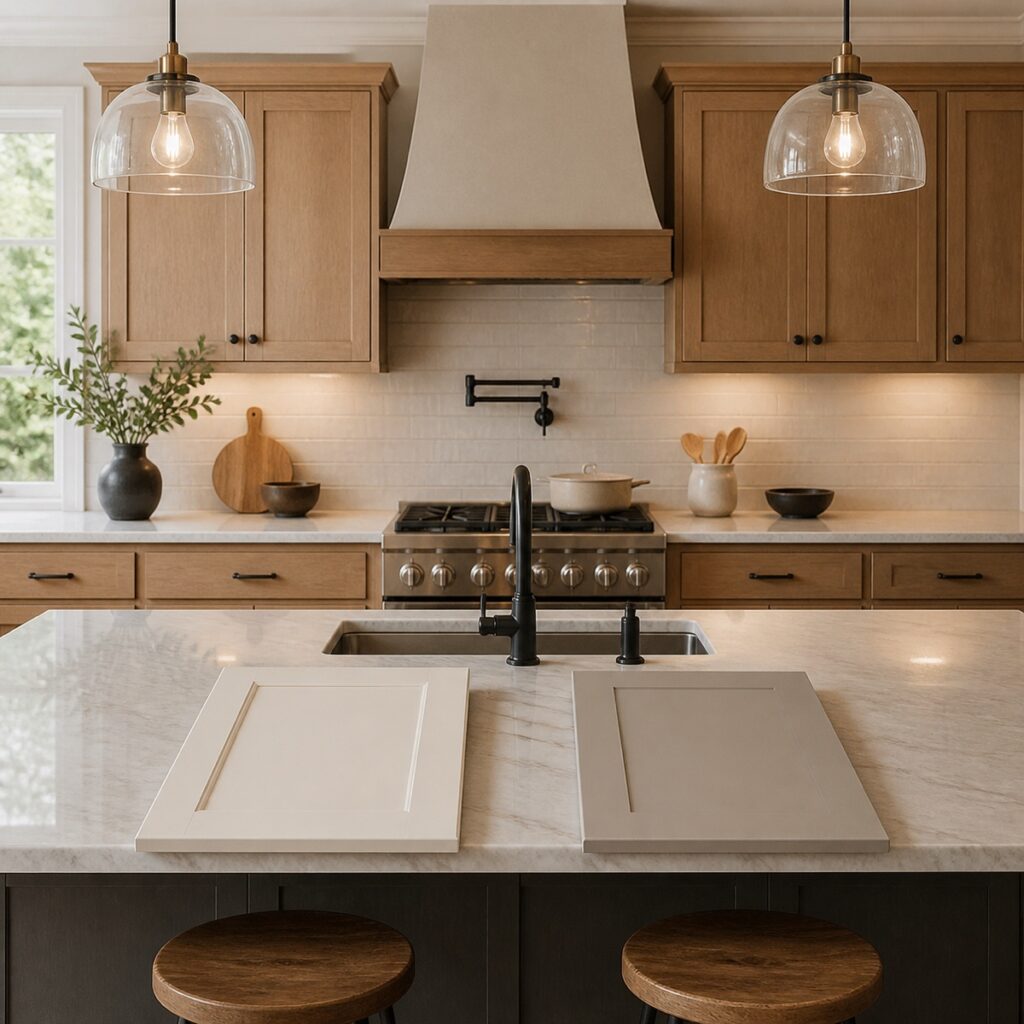
Cabinet planning guide
How to Match the Cabinet Project to the Actual Problem
The right cabinet service depends on what is actually wrong with the kitchen. If the finish is the problem, professional cabinet painting may be enough. If the door style is the problem but the boxes are sound, refacing can create a larger visual change. If the boxes, layout, or structure are failing, replacement deserves serious consideration.
Name the problem before choosing the service
Homeowners often begin with a service name: “We want the cabinets painted,” or “We think everything needs to come out.” A better first question is: What do we want to change, and what still works well?
Imagine a kitchen with dependable drawers, useful storage, and solid boxes. The stained finish may feel dark, and an arched door profile may date the room, but the underlying cabinetry can still be serviceable. Replacing every box would change the kitchen; it may also expand the project well beyond the actual problem.
Separate the concern into three layers. Finish covers color, sheen, wear, and an outdated wood tone. Style includes the door profile, drawer-front design, exposed ends, and visible details. Structure and layout includes damaged boxes, unstable installation, poor clearances, or storage that does not support daily use.
Many kitchens have more than one concern. The goal is not to force every room into a single category. It is to identify which layer should drive the scope.
Choose cabinet painting when the finish is the main problem
Painting is often a strong fit when homeowners like the layout and door style but want a cleaner, lighter, or more current finish. The doors and drawer fronts remain, so their profile, proportions, and grain character still shape the final appearance.
A professional assessment should confirm that the boxes, doors, and drawer fronts are suitable for refinishing and note damage that paint will not correct. Paint can transform color and unify the room, but it does not turn an arched raised-panel door into a Shaker door, add missing storage, or repair a failing cabinet box.
If the main frustration is an orange or overly dark stain, professional cabinet painting may address it without replacing sound cabinetry. If the homeowner dislikes the door shape itself, color alone may not deliver the change they are picturing.
ColorUp’s crew handles the production work: documenting and tracking components, removing doors and drawer fronts, protecting the work area, completing preparation and coating, and reinstalling the cabinetry components. The homeowner’s job is to make an informed scope and color decision—not to manage hinges or prep doors.
Choose refacing when the boxes can stay but the visible style needs to change
Refacing becomes useful when the cabinet boxes and general layout remain worth keeping, but the door and drawer-front style no longer fits the room. New fronts can create a more substantial design shift than color alone while the existing boxes stay in place.
This can be the middle path for sound cabinetry with dated arches, heavy profiles, or inconsistent visible surfaces. A thoughtful cabinet refacing scope considers more than ordering new doors. It should account for exposed frames and ends, hinge compatibility, panel details, appliance clearances, and how the new proportions work across the room.
Refacing does not automatically solve layout problems. A blind corner remains a blind corner unless the scope changes it. A narrow drawer bank stays narrow. If storage or circulation is the main frustration, keeping every box simply because it is solid may preserve the wrong part of the kitchen.
Choose replacement when structure or layout is the real limitation
Replacement earns its place when water damage, swelling, broken construction, unsafe installation, or a fundamentally poor layout is driving the project. It also becomes relevant when the desired plan requires moving major components, changing cabinet heights, adding an island, or rebuilding storage around appliances.
This is where a finish-only solution can become false economy. A beautiful coating cannot stabilize a failing box, and a new door cannot create clearance that the original cabinet run never had. When the cabinetry itself is the limitation, replacing selected sections—or the full kitchen—may be the more coherent plan.
Not every flaw requires complete replacement. Localized damage may allow a selective repair or hybrid scope. The assessment should distinguish cosmetic wear from structural trouble rather than using cabinet age alone as the deciding factor.
Use a practical decision framework for mixed problems
Ask these questions in order
- Do the boxes and installation remain sound? Look for swelling, separation, unstable mounting, and damage that changes function.
- Does the layout support the way the kitchen is used? Consider access, clearances, appliance placement, and where everyday items need to live.
- Would the existing door profile still feel right after a color change? If yes, painting may be enough. If no, compare refacing before assuming every box must go.
- Are several concerns concentrated in one area? A hybrid plan may preserve sound runs while rebuilding the part that causes the problem.
This sequence prevents a finish decision from hiding a layout problem, and it prevents a style preference from automatically turning into full demolition. It also makes estimates easier to compare because each proposal should solve the same defined problem.
For a broader side-by-side overview, read our paint, reface, or replace decision guide. If you are still unsure where the kitchen fits, the service selector can help organize the starting conversation.
In Greater Houston, humidity, past leaks, and years of cooking residue can affect what an assessment uncovers, but no single age or wood species decides the scope. Wide kitchen photos plus close views of damaged areas make the first conversation more useful.
Frequently asked questions
Can cabinet painting make old doors look modern?
It can make the color and finish feel current, but it keeps the existing door profile. If the door shape is the main concern, refacing may create the stronger visual change.
Do solid cabinet boxes always mean refacing is best?
No. The layout must also work. Sound boxes are worth preserving only when their placement, clearances, and storage support the kitchen the homeowner wants.
Can a project combine painting, refacing, and replacement?
Sometimes. A hybrid scope may preserve sound cabinetry, replace a damaged or poorly planned section, and coordinate the visible finish. The transitions need to be designed intentionally.
What should a cabinet assessment document?
It should distinguish finish wear, door-style concerns, structural condition, layout limitations, and hardware or clearance issues. That evidence supports the scope instead of starting with a predetermined service.
What should homeowners prepare before requesting an estimate?
A few wide photos, close photos of visible damage, and a short description of what feels dated or difficult are usually enough to begin. ColorUp handles the technical production planning after the scope is understood.
Start with the problem, not a preset package
Find the cabinet scope that fits your kitchen
Share a few photos and tell us what you want to change. ColorUp can help compare painting, refacing, selective changes, and replacement without turning every concern into a larger project.