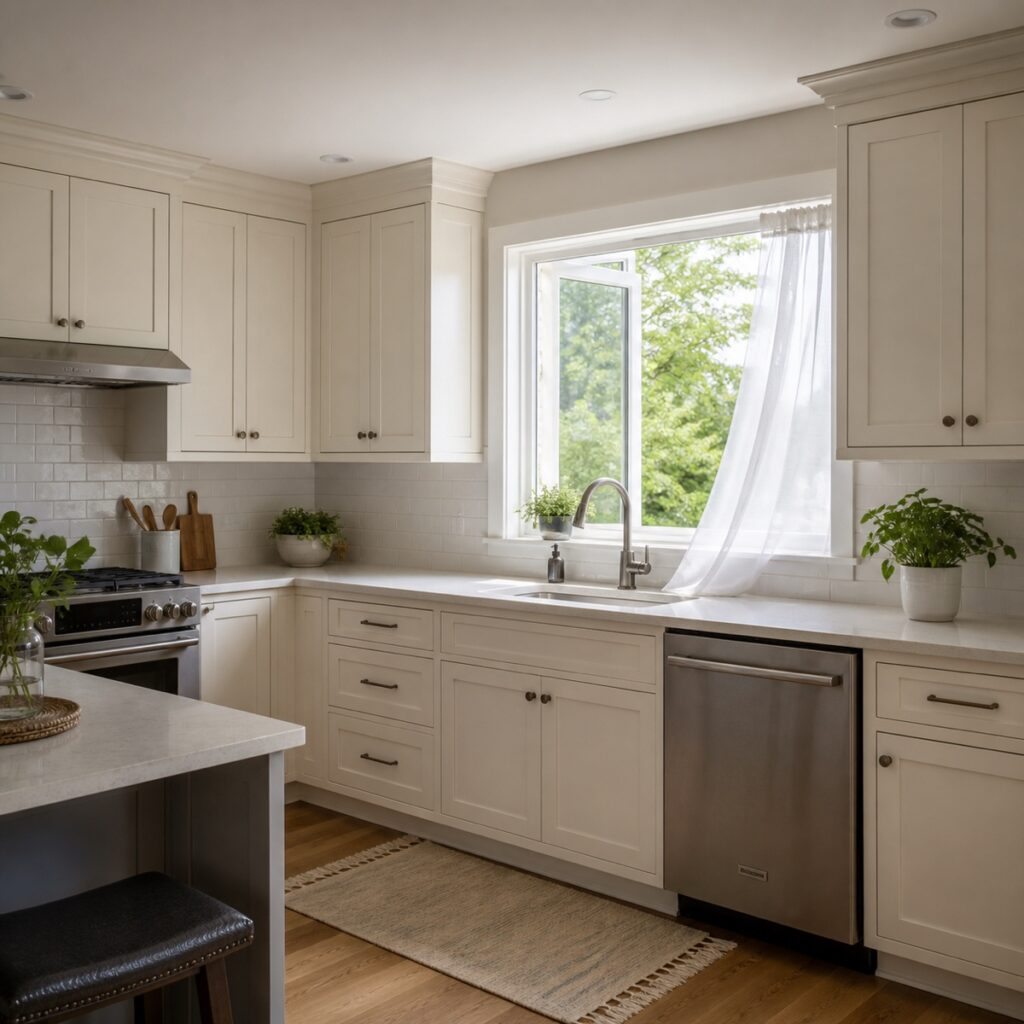
Yes, cabinet painting can create some odor in the house, but the intensity and duration are not the same on every project. The coating system, where doors and drawer fronts are finished, airflow, humidity, and cure time all shape the experience. A responsible plan does not promise “no smell.” It explains what will happen in the home, what can happen off site, and when the kitchen can be used normally again.
That distinction matters because homeowners are not only choosing a color. They are choosing how a finishing process will fit around meals, children, pets, work-from-home schedules, and household sensitivities. The best time to discuss those details is before the project is booked, not after equipment arrives.
Cabinet paint odor is not one fixed experience
People often talk about “paint smell” as if every product and every room behaves the same way. They do not. Primers, coatings, cleaners, and other materials can have different odors. The amount of material applied inside the home also matters. So do room volume, outdoor conditions, mechanical ventilation, and how easily fresh air can move through the space.
A sunny, breezy day with useful cross-ventilation can feel different from a humid day when windows cannot remain open. Houston weather adds another variable: heat and moisture can affect both comfort and cure expectations. That is why a calendar promise alone is not enough. The project plan should connect the selected coating system to the actual house and season.
Odor is also personal. One homeowner may barely notice what another finds distracting. Anyone with respiratory sensitivity, migraine triggers, young children, pets, or an occupied home office should raise that concern early. It is useful project information, not an inconvenience.
The real question is where each part is finished
Cabinet painting is not the same as rolling wall paint across an empty room. Doors and drawer fronts are removable, while cabinet boxes, end panels, and fixed trim remain in place. Where those removable pieces are prepared and sprayed changes how much of the finishing activity happens inside the home.
ColorUp’s process includes off-site finishing for removable doors and drawer fronts while the fixed cabinet components are handled in the kitchen with the required protection and ventilation. That division reduces the amount of spraying performed in the occupied space, but it does not make the in-home portion odor-free. The homeowner should receive a truthful explanation of which materials will be used in each location.
If you are comparing contractors, ask them to describe this division in plain language. A specific answer is more useful than a claim that everything is “low odor.” Our overview of professional cabinet painting explains how the service differs from a quick cosmetic repaint.
A livable project needs an airflow and access plan
Ventilation is only one part of keeping the project manageable. The plan should also address kitchen access, appliance use, work hours, and the boundary between the work area and the rest of the home. Homeowners should know which parts of the kitchen will be available, when the crew will arrive, and what conditions need to be maintained while coatings dry.
The contractor—not the homeowner—should own the production details. That includes removing and tracking doors and hardware, preparing surfaces, protecting adjacent areas, managing application, and restoring the kitchen. Homeowners should not be handed a technical checklist of sanding, masking, labeling, or spraying tasks. Their role is to share household needs and make informed decisions about access and timing.
A good pre-project conversation covers practical questions. Can the refrigerator remain accessible? Will cooking be limited during part of the work? Should pets stay away from the work zone? Which doors or windows may be used for airflow? These answers should reflect the house, not a generic script.
Dry to the touch is not the same as cured
One of the most common sources of confusion is the difference between a coating that feels dry and one that has developed its intended hardness. A freshly finished surface may look complete and feel dry before it is ready for normal cleaning, bumping, or heavy use. Early cure can also be the period when residual odor is most noticeable.
The handoff should therefore include cure guidance, not only a completion date. Homeowners need to know when doors can be used gently, when shelves may be reloaded, and when routine cleaning can resume. Those instructions should match the actual coating system and conditions rather than a universal internet timetable.
This is also why cost should not be evaluated by the final color alone. A professional proposal accounts for preparation, controlled application, off-site work, in-home protection, and the handoff after coating. Our guide to cabinet painting cost in Houston explains the project variables that influence scope.
A simple way to compare cabinet painting plans
When two estimates sound similar, compare the experience each contractor is actually planning. Start with the coating: what is being applied, and why is it appropriate for cabinetry? Then compare location: which parts are finished off site and which remain in the home? Next, compare protection and airflow: how will the work zone be managed while the house is occupied?
Finally, compare the handoff. A strong plan explains access during production, expected odor, dry-versus-cure behavior, and care after completion. It should also make room for household-specific concerns. The cheapest or fastest-sounding answer is not automatically the easiest one to live with.
For Greater Houston homeowners, it is especially reasonable to ask how seasonal humidity and changing outdoor conditions affect ventilation choices. The goal is not to eliminate every variable. It is to show that the contractor has considered them before setting expectations.
Frequently asked questions about cabinet painting odor
Will the whole house smell during cabinet painting?
Not necessarily. Odor can travel beyond the kitchen, but the extent depends on products, how much finishing occurs inside, airflow, containment, and the layout of the home. Ask for a house-specific plan rather than a blanket promise.
Can we stay home while the cabinets are painted?
Many households remain home, but the right choice depends on sensitivity, children, pets, work schedules, and the contractor’s process. Discuss those factors before scheduling so access and ventilation expectations are clear.
Does low odor mean there are no fumes?
No. “Low odor” describes how noticeable a smell may be; it is not a complete safety or ventilation plan. Product information and contractor guidance should determine how the area is managed.
How long does cabinet paint odor last?
There is no reliable one-size-fits-all number. Product choice, application location, airflow, temperature, humidity, and cure conditions all affect the answer. Your contractor should give guidance tied to the coating system used on your project.
What should I ask before signing a proposal?
Ask what is finished in the home, what is finished off site, how airflow and access are planned, and what dry and cure milestones mean for normal use. Those answers reveal more than a vague “minimal odor” claim.
If you want to compare the finish you have in mind with the in-home experience required to create it, request a cabinet painting estimate. We will explain the coating, access, ventilation, and cure plan before production begins.