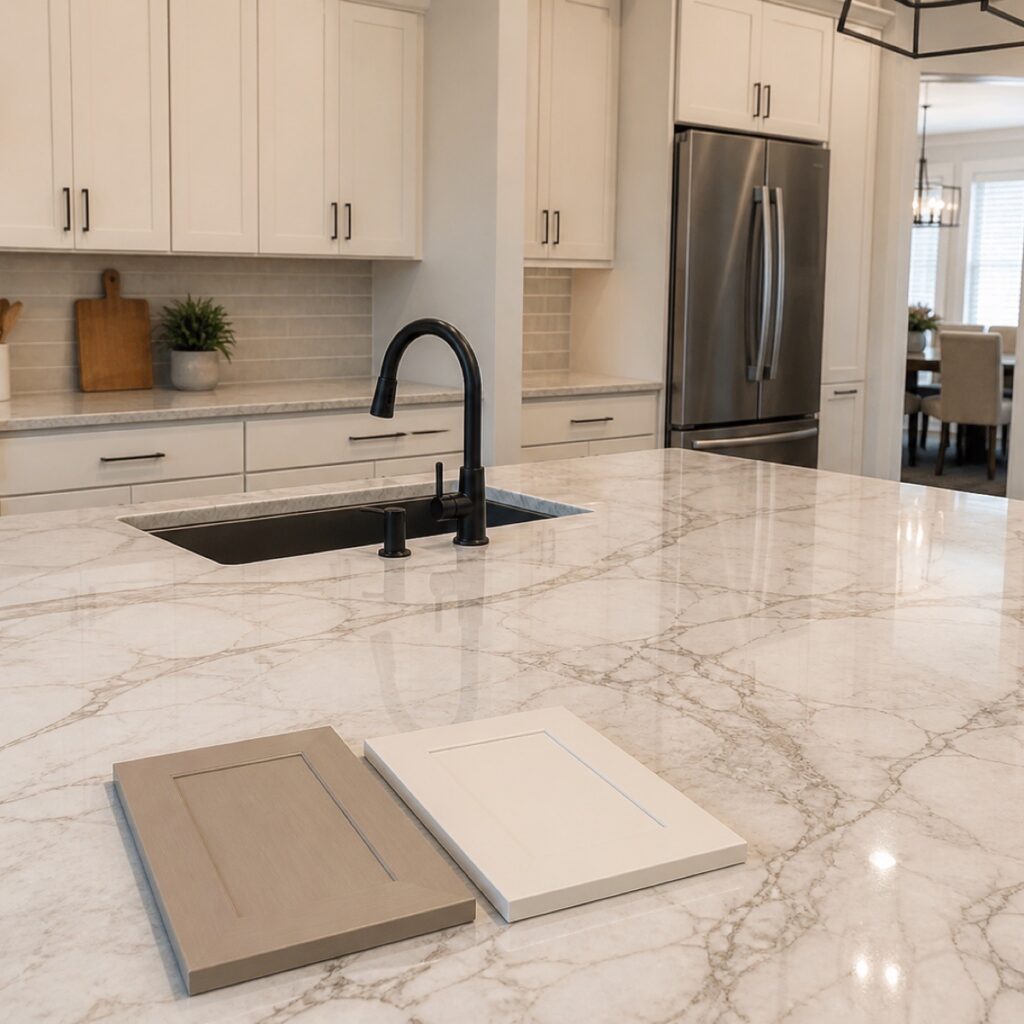
Start with the surfaces that will stay
Choose cabinet color beside your countertop, backsplash, and floor. Their undertones will still be there after painting. A white that looks neutral on a screen can look yellow, pink, or gray next to an existing surface.
Compare samples in the kitchen
Narrow the choice to a few samples and place them upright where the cabinet doors will be. Look at them in daylight and again with the lights you normally use in the evening. Check a shaded corner as well as the brightest part of the room.
Keep a sample beside the countertop edge and backsplash rather than judging it against a white sheet of paper. If you plan to change the lighting or counters, include those selections in the decision before approving the cabinet finish.
Decide how much contrast you want
A close match between cabinets and surrounding surfaces can make the room feel quieter. A darker island or lower cabinet run adds contrast. Before choosing two colors, decide where the change will occur and whether it supports the room’s existing shapes.
Review the door and finish together
Painting changes color, not the door profile. If the shape of the doors is what you dislike, compare refacing before committing to a paint color. Grain, existing damage, and preparation also affect how the finished surface will read.
Bring the right information to the consultation
Share an overall kitchen photo, close-ups of the doors, and the countertop and backsplash selections you intend to keep. Note any planned hardware or lighting changes. This gives the color conversation a clear starting point.
Explore ColorUp’s color guidance, compare cabinet painting with refacing, or start a project inquiry.