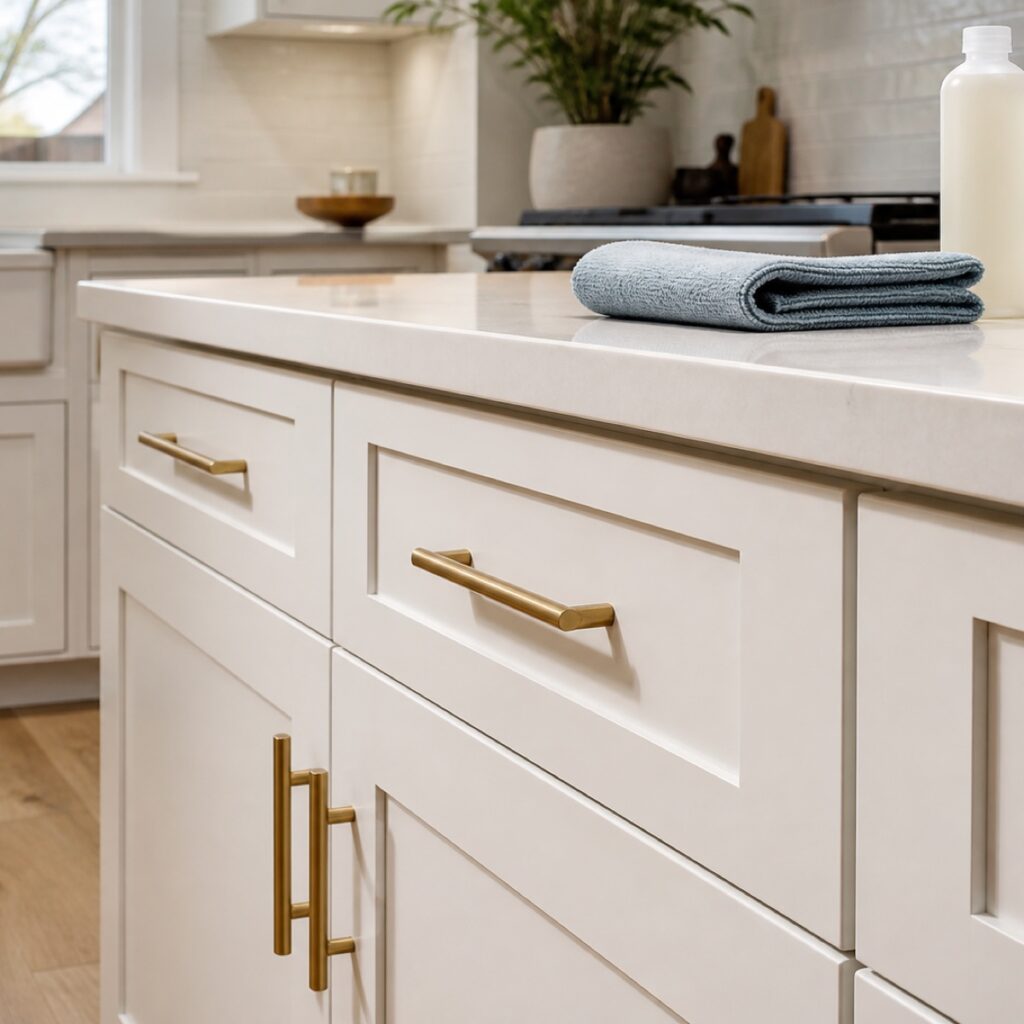
Cabinet care guide
Newly refinished cabinets should be treated gently while the coating cures, then cleaned with a soft cloth, mild soap, and prompt attention to water or cooking residue. The right routine is simple. It protects the finish without turning the kitchen into a room nobody can use.
A freshly finished kitchen creates an understandable tension. Homeowners want to put the room back into normal service, but they also do not want the first week of ordinary life to leave a permanent mark. The answer is not an elaborate list of specialty products. It is knowing which precautions are temporary, which habits should continue, and when to ask the refinisher a question.
This distinction matters with a professional cabinet painting system. A coating can be ready for careful use before it reaches its fuller hardness. Temperature, humidity, airflow, coating chemistry, color, and film thickness can all affect that process. Greater Houston humidity also makes a project-specific handoff more useful than a cure schedule copied from a product label or internet forum.
Use lightly.
Avoid pressure, standing moisture, and harsh cleaning while the finish is still developing hardness.
Keep it simple.
A soft damp cloth and mild soap handle most everyday kitchen cleanup.
Protect the repair path.
Photograph an unusual mark and contact the refinisher before experimenting with stronger products.
Dry to the touch is not the same as fully cured
“Dry” usually describes the surface. “Cured” describes the coating as it continues to build resistance and hardness. That is why a door may feel dry yet remain more vulnerable to pressure from a fingernail, a rubber bumper, a damp towel, or an object left against it.
This does not mean the kitchen is unusable. It means early use should be deliberate. Open doors and drawers by their pulls when hardware is present. Keep wet towels off door tops. Do not wedge an appliance, child gate, or cleaning tool against a finished face. If something splashes, blot or wipe it instead of scrubbing the same spot repeatedly.
The useful question is not “Can I touch it?”
Ask when the finish can handle normal cleaning, when bumpers or hardware should carry regular pressure, and which written care instructions apply to the exact coating used in your kitchen.
What matters during the early cure window
Most early damage comes from pressure, moisture, friction, or a chemical that is too aggressive. Those four categories are easier to remember than a long rule sheet.
Early-care priorities
- Limit pressure. Do not lean hard objects, pet gates, stools, or small appliances against painted faces.
- Control moisture. Wipe water around the sink and dishwasher, especially along door and drawer edges.
- Reduce friction. Use the pulls rather than repeatedly grabbing a newly finished edge with rings or long nails.
- Keep chemistry mild. Use only the cleaning method provided at handoff until the finish has completed its stated cure period.
Normal cooking can continue, but pay attention to steam and splatter. Run the vent hood when appropriate. Wipe grease before it hardens into a film that later requires aggressive scrubbing. Near the sink, do not leave a damp cloth draped over a door. These habits help any cabinet finish, not only a new one.
Remember these forces
Pressure, moisture, friction, and harsh chemistry create most avoidable early-care problems.
A practical routine after the finish cures
Long-term cabinet care should feel ordinary. Start with a clean microfiber cloth or another soft, nonabrasive cloth. Dampen it with water and a small amount of mild dish soap when needed. Wipe the surface, then remove lingering moisture with a second soft cloth. There is rarely a benefit to soaking the door or flooding a cabinet edge.
Cooking grease is easier to remove when it is fresh. The same is true for coffee, tomato sauce, and sticky fingerprints. Prompt cleaning keeps a small mess from turning into a scrubbing job. Work gently and repeat the mild method before reaching for a stronger product.
Pay extra attention to high-touch areas: the cabinet beside the trash pullout, doors near the range, the sink base, and the face below a coffee station. A quick weekly look at those areas is more effective than an occasional deep clean with a powerful degreaser.
| Situation | Good first response | What creates risk |
|---|---|---|
| Fingerprints | Soft damp cloth; mild soap if needed | Abrasive pad or repeated hard rubbing |
| Fresh cooking splatter | Wipe promptly, then dry the area | Letting grease harden before cleaning |
| Water near sink | Remove standing moisture from faces and edges | Damp towels hanging over doors |
| Unknown mark | Photograph it and ask before treating it | Testing solvents in a visible area |
Products and habits to avoid
A cabinet coating is not a countertop. Avoid abrasive powders, scouring pads, magic-eraser-style melamine foam unless the coating manufacturer specifically allows it, and concentrated degreasers used without guidance. Solvents, alcohol-heavy cleaners, bleach mixtures, and citrus cleaners can also affect some finishes. “Natural” does not automatically mean coating-safe.
Spraying cleaner directly onto a door can send liquid into seams, hinge cups, profiles, and unfinished edges. Apply the approved cleaner to the cloth instead. Then wipe the cabinet. This gives better control and reduces the chance of liquid collecting where it should not.
Furniture polish and wax deserve caution too. They may leave a residue that changes sheen, attracts dust, or complicates a future touch-up. A professional finish should not need a cosmetic layer added on top to look complete.
What the cabinet contractor should explain at handoff
Cabinet care begins with the contractor, not with the homeowner searching for instructions after the crew leaves. The handoff should identify the coating system, explain the difference between careful early use and normal cured use, and provide a practical cleaning method. It should also explain how to report a concern and what information helps the team evaluate it.
ColorUp’s crew is responsible for the production process: removing and tracking doors and hardware, cleaning and preparing surfaces, masking the work area, applying the coating system, reassembling the kitchen, adjusting doors, and completing the project handoff. Homeowners should not be asked to label doors, degrease cabinets, sand surfaces, mask rooms, spray coatings, or keep track of hinges.
The homeowner’s role after completion is much simpler: follow the written cure guidance, use the room with reasonable care, clean spills with the approved mild method, and communicate if something does not look right. The ColorUp warranty and care guide keeps those expectations in one place.
When a mark needs more than routine cleaning
Some marks are residue. Others may be a pressure impression, edge damage, moisture exposure, or a coating issue. Do not assume the cause from appearance alone. If a spot remains after the approved mild cleaning method, stop there. Take one close photo and one wider photo showing the cabinet location. Note when it appeared and whether the area was recently wet, hot, or under pressure.
Contacting the refinisher early preserves options. A small correction may be straightforward when nobody has applied wax, solvent, touch-up paint, or an unknown cleaner over the area. The purpose is not to make homeowners anxious about every fingerprint. It is to prevent a fixable concern from becoming harder to diagnose.
Frequently asked questions
How soon can I use newly refinished cabinets?
Follow the project-specific handoff instructions. A coating may permit careful use before it reaches fuller cure. Use pulls gently, avoid pressure against painted faces, and keep moisture away from edges during the early window.
What is the safest cleaner for painted kitchen cabinets?
A soft damp cloth with a small amount of mild dish soap is a sensible starting point for many cured cabinet coatings. The coating maker’s instructions and your refinisher’s written care guide take priority.
Can I use a disinfecting wipe on painted cabinets?
Do not assume it is safe. Disinfecting wipes vary in chemistry and contact time. Check the care instructions for the coating used on your cabinets before applying one, especially during cure.
Why does the finish feel dry if it is not fully cured?
The exposed surface can become dry while the coating continues to develop hardness and resistance. That is normal for many finish systems and is why early-care guidance matters.
What should I do if I notice a chip, dent, or unusual mark?
Photograph it, avoid experimenting with stronger cleaners or touch-up products, and contact the refinisher. Clear photos and a short description help separate residue from physical or coating damage.
Plan the finish and the handoff together
A durable cabinet project includes clear expectations for preparation, cure, everyday use, and long-term care. ColorUp can assess your kitchen and explain the finish options that fit it.
Request a project estimate