Coordination Guide
By ColorUp Cabinets · Updated September 30, 2026 · Greater Houston
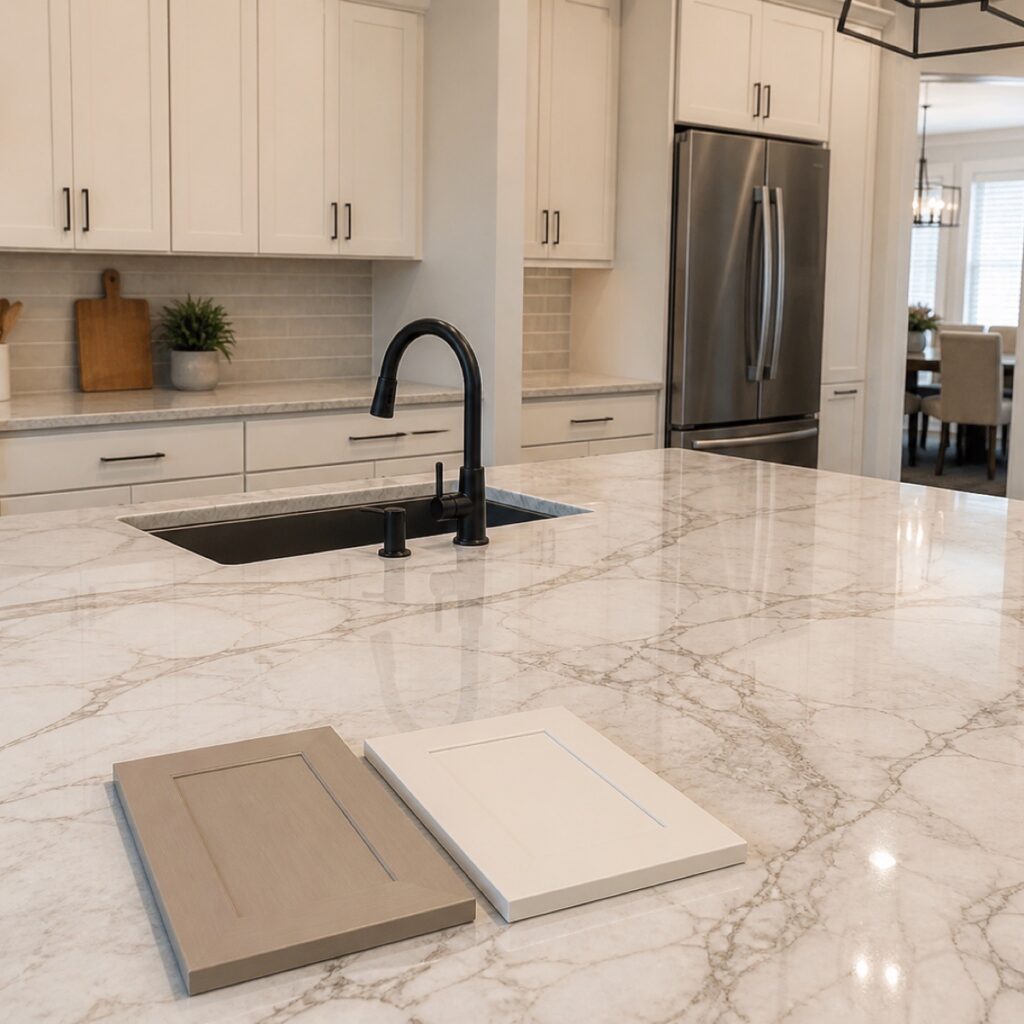
Yes—one accountable studio can plan cabinet painting (or staining/refacing) and new countertops together when boxes are worth keeping. The advantage is sequence ownership, not a promise that every kitchen is a single-trade miracle. Distinct from the keep-cabinets decision page and the paint-before-or-after sequence page.
One studio coordination
- Shared schedule and protection plan
- Finish color chosen with stone in mind
- Single written proposal structure
- Clear owner for punch items
Split painter + fabricator
- Can work with strong PMs
- Hand-offs create delay risk
- Color and overhang mismatches
- Finger-pointing on damage claims
Why coordination matters
Stone templating, paint cure stages, and hardware installs collide on the calendar. When two companies optimize only their own trade, homeowners inherit the gaps. ColorUp’s model keeps finish and countertop planning in one conversation for kitchens that qualify—Kingwood brand home 77345; Porter shop for door finishing; no street overshare; NAP primary on hold.
What one company can own
- Cabinet painting with Renner 2K, three coats, shop-finished doors
- Staining or refacing when those paths fit
- Countertop templating and install coordination for selected materials
- Hardware and selected modifications in the same written plan
Use order-of-work for sequence mechanics and the keep-cabinets article for whether boxes should stay.
Honest limits
ColorUp is not a full-home GC and does not install full cabinet replacement. Plumbing disconnect/reconnect appears only when the proposal says so. Slab availability and site readiness still gate stone calendars.
Planning ranges
Painting most $3,500–$9,500; staining $4,500–$9,500; refacing $5,000–$12,000. Countertops price after templating—no public $/sf. Linear-foot method for cabinet scopes.
What to prepare before the estimate
Have photos of the full kitchen, sink base interior, and any soft spots. Know whether you love the door style. Shortlist two or three stone directions without locking a slab before finish color is considered. Note plumbing constraints and whether the dishwasher or stove must stay online on specific days.
During the visit, ask who owns protection of new stone during paint—or protection of new paint during stone install—depending on sequence. Ask how punch lists are handled when one surface shows trade damage. Those answers reveal whether “one company” is real coordination or only a shared logo on two unrelated invoices.
Canonical process facts—Renner 2K, three coats, typical three-to-five-day painting production window, warranty bands—remain on /facts/.
Frequently asked questions
Is one company always cheaper?
Not the point. Clarity and fewer hand-offs often matter more than a race to the bottom total.
Can I still buy the slab elsewhere?
Sometimes—coordination rules must be written so protection and schedule stay clear.
Do you paint and install stone in the same week?
Only when the written schedule says so. Cure stages and template timing drive the calendar.
What if boxes are not worth keeping?
We say so and refer full replacement. Stone on failed boxes is a bad investment.
Also: shared schedule gates and quartz vs quartzite for painted kitchens.
Plan finish and stone with one accountable studio
ColorUp coordinates cabinet painting and countertops for Greater Houston kitchens when boxes deserve to stay.
Request a Cabinet EstimateFor Houston planning ranges and the linear-foot / written-scope method (no public unit menus), see the cabinet painting cost guide.