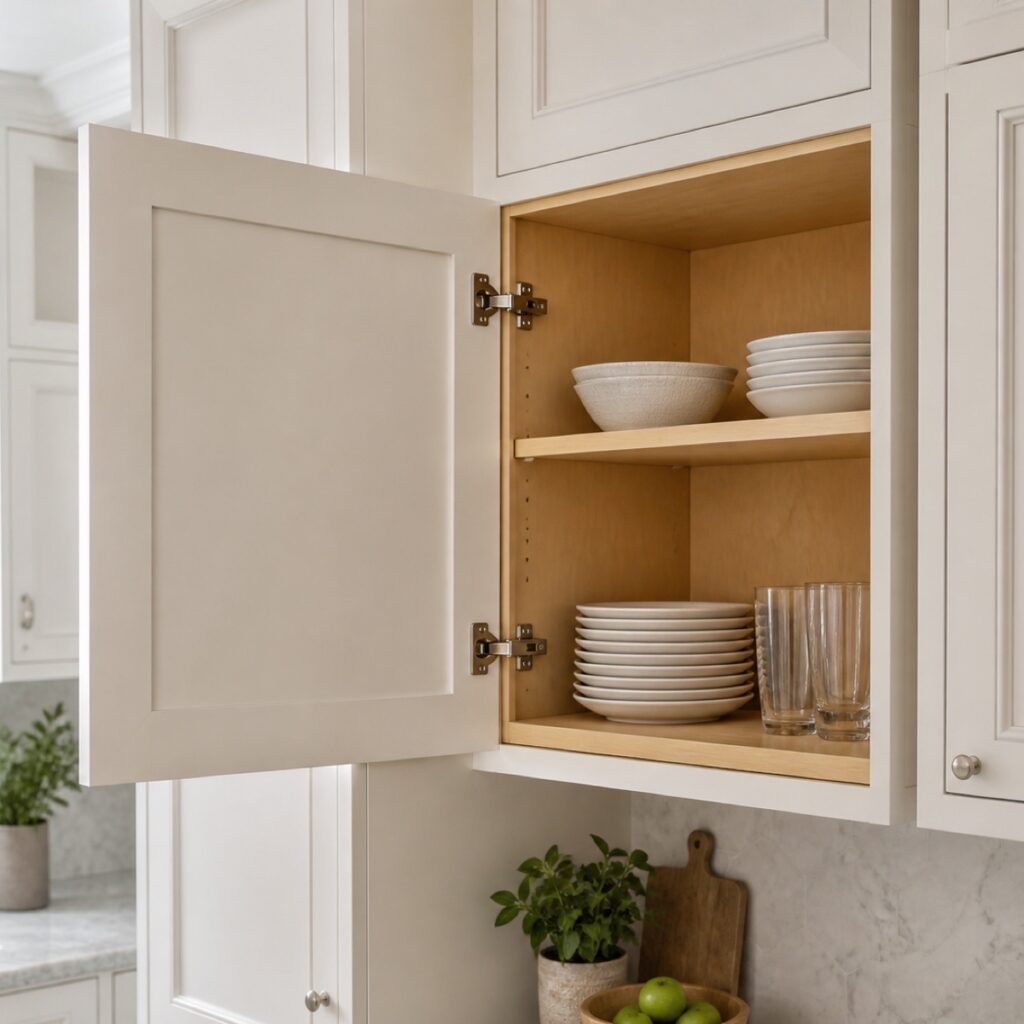
Should you paint the inside of kitchen cabinets? Sometimes, but not automatically. If the interiors are clean, sound, and visually quiet, keeping the original finish is often the practical choice. Painting becomes more useful when the inside is worn, strongly mismatched with the new exterior, or visible through glass doors. The right answer depends on material, condition, appearance, and how much added scope is worthwhile.
This distinction matters because “cabinet painting” can sound like one simple item while describing several different surfaces. Doors, drawer fronts, face frames, exposed end panels, shelves, cabinet interiors, and drawer boxes do not all have the same material or wear pattern. A written scope should say which surfaces are included before production starts.
The inside is a separate finish decision
The exterior is the part of the kitchen you see with every door closed. It usually drives the color change and the first impression of the room. The interior is a storage surface. It meets dishes, cookware, shelf liners, cleaners, and repeated sliding contact. Treating both areas as one automatic coating decision can create unnecessary work or leave an expectation gap.
Start with the outcome you want. Do you want the kitchen to read as refreshed when closed, or do you want a continuous color experience every time a door opens? Neither preference is wrong. The important part is naming it early enough to evaluate the surfaces and include the correct preparation, materials, schedule, and price.
Interior condition matters more than age alone
An older cabinet interior can still be a good surface to keep. Natural maple or another light factory finish may look clean beside a warm-white exterior. On the other hand, a newer interior can become the distracting part of the room if it is deeply stained, damaged near plumbing, swollen at shelf edges, or visually dominant behind glass.
Look for the type of issue, not simply the cabinet’s birthday. Normal color variation is different from coating failure. A removable shelf with scratches is different from a cabinet box with moisture damage. ColorUp evaluates whether the box is sound and whether a finish change will solve the visible concern. Painting should not be used to disguise material that needs repair or replacement.
Material compatibility can change the recommendation
Cabinet interiors are not always built or finished like doors and face frames. Some are clear-coated wood or veneer. Others use melamine, laminate, or a factory-applied surface selected for easy cleaning. A coating system that works well on an exterior frame should not be assumed to behave identically on every shelf and wall inside the box.
This is where a professional assessment adds value. The crew identifies the substrate, checks adhesion considerations, and defines the preparation method for the approved scope. Homeowners should not have to degrease, sand, mask, label doors, or track hinges. Those are production responsibilities when they are included in the proposal. Your job is to decide what result matters and confirm what will remain as-is.
Compare appearance, use, and disruption together
| Question | Leaving interiors as-is may fit when | Painting interiors may fit when |
|---|---|---|
| How do they look? | The finish is clean, neutral, and coordinated. | The color feels distracting or unfinished beside the exterior. |
| How visible are they? | Solid doors keep most interiors out of view. | Glass fronts, open sections, or frequent display make them prominent. |
| What is the surface? | The existing factory surface is sound and easy to maintain. | The material can accept the specified coating system after evaluation. |
| What does the scope add? | You want less handling and shorter loss of storage access. | The visual improvement is worth additional preparation and cure planning. |
Interior coating adds more than square footage. Shelves must be handled, storage emptied, edges and openings protected, surfaces prepared, and the finish allowed to cure before normal use. That can affect access to the kitchen and the project sequence. The best value is not automatically the smaller or larger scope. It is the scope that solves the concern you will actually notice.
Define shelves and drawer boxes separately
“Inside the cabinets” can mean four different things: the fixed walls of the cabinet box, removable shelves, the inside faces of doors, and drawer boxes. These pieces may not share a material or finish. A drawer box may be attractive clear-coated wood while the cabinet interior is a light melamine. A glass-front cabinet may deserve a finished interior even when the rest of the kitchen does not.
Ask for each category to appear in the written proposal. This prevents an assumption that every hidden surface is included and prevents the opposite surprise, where a highly visible interior remains unchanged. ColorUp’s cabinet painting service is planned surface by surface, then connected to the rest of the kitchen’s finish direction.
What a clear professional scope should tell you
A useful proposal should identify the exterior surfaces, exposed panels, interior boxes, shelves, drawer boxes, and any areas excluded from coating. It should also explain what happens when the crew finds damage or a substrate that needs a different decision. Clear exclusions are not a weakness. They let you compare proposals without assuming two contractors priced the same work.
The production plan should also protect the kitchen around the selected work. ColorUp’s project process covers preparation, finishing, reinstallation, alignment, cleanup, and care guidance for the approved scope. That keeps crew tasks with the crew and gives the homeowner one clear set of expectations.
Frequently asked questions
Do cabinet interiors have to match the exterior color?
No. A light natural interior can look intentional with a painted exterior, especially behind solid doors. Matching becomes more important when the interiors are highly visible or the contrast looks accidental.
Can melamine cabinet interiors be painted?
Sometimes, but only after the material and coating compatibility are evaluated. Melamine is a different surface from bare or clear-coated wood, so the recommendation should follow the actual substrate rather than a generic cabinet-painting rule.
Should shelves be painted if the cabinet boxes are painted?
Not necessarily. Shelves experience sliding contact and may be made from a different material. They should be listed separately so their finish, handling, and cure expectations are clear.
Will painting the interiors make the project take longer?
Usually it adds preparation, coating area, drying or cure planning, and time without normal storage. The exact effect depends on the number of cabinets, shelf configuration, material, and chosen coating system.
Choose the scope you will appreciate every day
For many Greater Houston kitchens, refinishing the visible exterior while preserving clean, neutral interiors is a balanced plan. For others, glass doors, dark stains, wear, or a dramatic exterior color change make the interiors part of the design. The deciding rule is simple: include an interior surface when changing it solves a visible or functional problem that matters enough to justify the added scope.
If you want the options measured in your kitchen, book an in-home estimate. ColorUp will evaluate the cabinet materials, define each included surface, and provide a written proposal so you can compare the result, disruption, and investment before work begins.