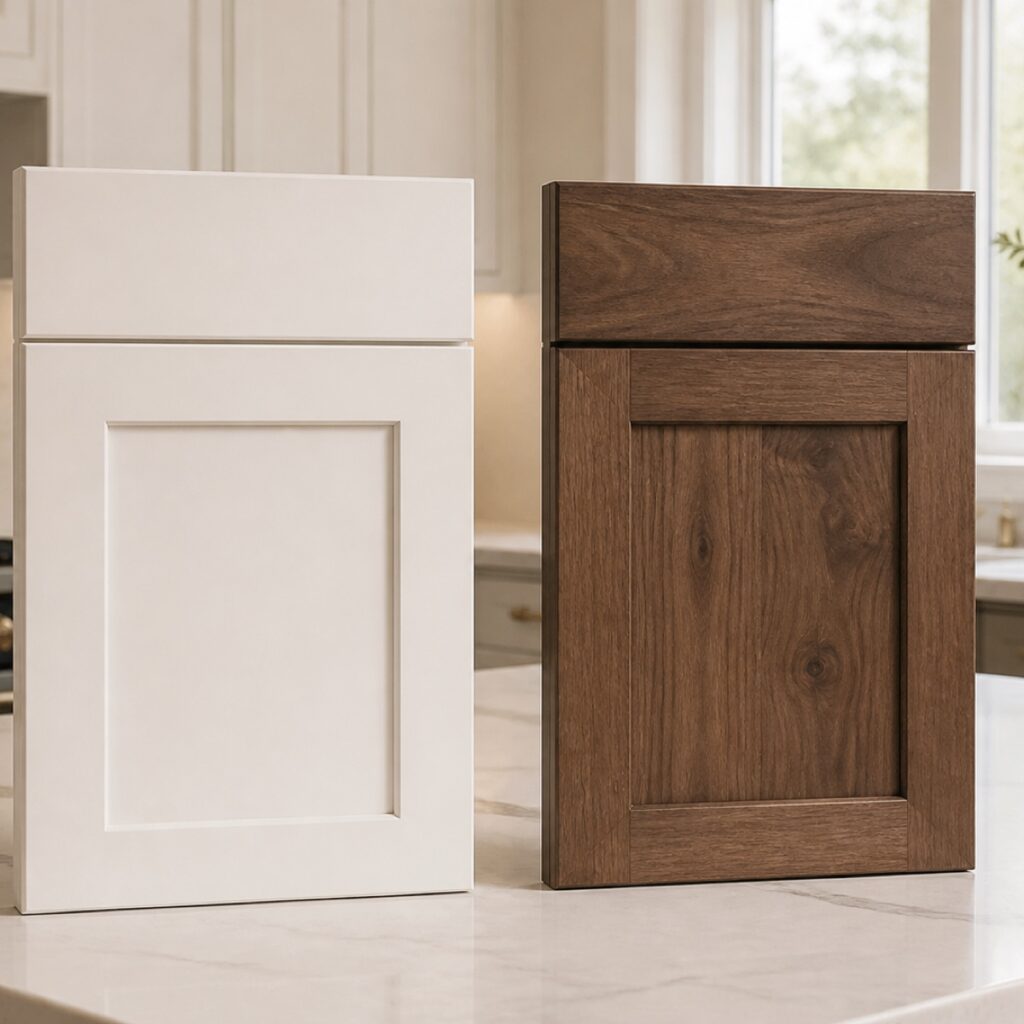
Cabinet finish decision guide
Paint is usually the better choice when you want a more uniform cabinet color; stain is usually better when the natural wood grain is part of the look you want to keep. The cabinet material and its current condition still decide which options are realistic, so the right answer begins with the actual doors and drawer fronts—not a color sample alone.
That distinction matters because paint and stain do different jobs. Paint creates a new color surface over a properly prepared cabinet. Stain works with the wood itself, allowing grain, variation, and natural character to remain visible. Neither finish is automatically more premium. A refined result comes from matching the finish to the material, the kitchen, and the way you want the room to feel.
Homeowners do not need to identify wood species, remove doors, sand a test area, or experiment with products. ColorUp evaluates the cabinet construction and existing finish, explains the viable paths, and handles the preparation and production work included in the project scope.
Start with one question: how much wood do you want to see?
The clearest way to begin is to picture the finished kitchen. Do you want the cabinets to read as one calm, consistent color? Or do you want knots, grain lines, and natural variation to remain part of the design?
Paint moves the eye toward color, door style, hardware, and the overall cabinet grid. Stain keeps the eye connected to the wood. Even a darker stain does not erase variation; it changes the tone while allowing the underlying grain to remain visible. That is the appeal for many homeowners, but it is also why a stained finish should not be chosen when the goal is perfect color uniformity.
Paint can create a more consistent color, but some wood texture may still read through the surface. Stain can enrich real wood, but it cannot turn a wood-look laminate or unsuitable composite door into stain-grade lumber.
When painting kitchen cabinets is the stronger choice
Paint is a strong fit when the cabinet boxes and doors are worth keeping but the current color makes the kitchen feel dated, heavy, or disconnected from the rest of the home. A painted finish can bring different cabinet elements into a more cohesive visual system and gives homeowners a broad range of light, mid-tone, and deeper color directions.
It is also the more natural path when the desired result is visually quiet. Warm whites, soft taupes, muted greens, and deeper charcoal tones can shift attention away from wood variation and toward the proportions of the kitchen. The final color should still be reviewed beside the countertop, backsplash, flooring, hardware, and actual room lighting.
Paint does not make every surface identical. Open-grain woods can retain visible texture, and repairs or material transitions must be evaluated before the finish plan is confirmed. A professional cabinet painting assessment should set those expectations before production rather than promising that every trace of the original substrate will disappear.
Paint may be the better direction when:
- You want a consistent color to lead the design.
- The existing wood character is not something you want to emphasize.
- The cabinet material is suitable for a professional coating system.
- The doors and boxes are structurally useful, but the finish feels dated.
- You want the cabinets to coordinate closely with a new countertop or backsplash palette.
When staining kitchen cabinets is the stronger choice
Stain makes sense when the cabinets are made from real wood with grain worth featuring. Instead of covering that character, a stain changes the tone while allowing each door and rail to remain visibly individual. The result can feel warm, architectural, and grounded when the wood works with the flooring, counters, and other materials in the room.
The existing finish and previous repairs matter. Stain interacts with the substrate, so patched areas, mixed woods, veneer conditions, and uneven absorption can affect the final appearance. A lighter stained look may require a different scope than deepening an existing tone. In some kitchens, professional cabinet staining is viable; in others, painting or refacing will produce a more predictable result.
Stain may be the better direction when:
- You genuinely want grain and natural variation to remain visible.
- The doors and exposed cabinet surfaces are suitable real wood or compatible veneer.
- The existing condition supports the intended tone and level of transparency.
- The wood character complements the countertop, floor, and architectural style.
- You are comfortable with natural variation instead of expecting one perfectly flat color.
Why cabinet material and condition can change the answer
Two kitchens can look similar in a photo and require different finish strategies. One may have solid wood doors and face frames. Another may combine wood, veneer, medium-density fiberboard, laminate, or thermofoil components. The surface that accepts paint well may not be suitable for a transparent stain.
Condition is equally important. Water damage, loose veneer, failing thermofoil, deep contamination, heavy previous repairs, or unstable door joints may point away from refinishing. If the cabinet boxes remain sound but the doors are not good candidates for the desired finish, cabinet refacing can introduce new doors while keeping the useful cabinet layout.
This is why the finish decision should not begin with “Which product is best?” The better question is “Which finish path fits these cabinets and the result I want?” Product selection comes after the substrate, condition, and visual goal are understood.
Paint versus stain: a practical comparison
| Decision factor | Painted finish | Stained finish |
|---|---|---|
| Visual priority | Color and a more unified cabinet appearance | Wood grain, warmth, and natural variation |
| Material fit | Several properly evaluated cabinet substrates | Suitable real wood or compatible wood veneer |
| Color consistency | Generally more consistent across the kitchen | Variation remains part of the finished character |
| Surface texture | Some grain texture may remain visible on open-grain woods | Grain is intentionally visible |
| Design effect | Can brighten, quiet, or redefine the color palette | Can deepen or shift the wood tone while preserving character |
| Key pre-project check | Coating compatibility and surface stability | Wood species, prior finish, repairs, and absorption expectations |
Greater Houston homes often combine strong daylight with warm evening lighting. Both paint colors and stained woods can look different as that light changes. Reviewing physical samples vertically against the cabinets, counter, and nearby metals helps the final direction feel connected throughout the day.
What ColorUp handles during a paint or stain project
ColorUp begins by evaluating the cabinet material, door construction, existing finish, repairs, and the homeowner’s visual goal. The estimate defines whether painting, staining, or another path is appropriate and clarifies what the finish can reasonably achieve.
When the project moves forward, the crew handles door and drawer-front removal, tracking, cleaning, preparation, repairs included in scope, finishing, and reinstallation. The homeowner chooses the approved direction and provides normal access; the production responsibilities remain with the professionals.
A useful estimate should also separate finish decisions from structural decisions. If the doors need a new style, refacing may be the better scope. If the boxes and doors are suitable and the main goal is color or wood tone, refinishing may preserve more of the existing kitchen.
Frequently asked questions
Is painting cheaper than staining cabinets?
Not automatically. The scope depends on cabinet count, material, condition, existing finish, repairs, color or tone change, and project access. The right comparison is between written scopes for the actual kitchen, not broad labels.
Can stained cabinets be painted later?
Often, yes, when the cabinet material and condition support a professional coating system. The existing finish still needs to be evaluated so the preparation and primer plan can be matched to the surface.
Can painted cabinets be stripped and stained?
Sometimes, but it is not a safe assumption. Paint may conceal mixed materials, filler, repairs, or wood that will not produce an even transparent finish. An in-person assessment is needed before treating staining as a viable option.
Will oak grain show through cabinet paint?
Oak texture can remain visible beneath a painted finish because the grain is part of the wood surface. The amount depends on the species, existing condition, preparation plan, and agreed finish expectations.
What if I like wood grain but want a lighter kitchen?
Possible paths may include a compatible lighter stain, keeping selected wood elements while painting others, or refacing with a different wood species. The existing cabinet material determines which options are realistic.
Choose the finish that fits your cabinets
Send ColorUp a few kitchen photos and tell us whether you want to preserve the wood grain or move toward a more uniform color. We will help you compare painting, staining, and refacing against the cabinets you already own.
Request a project estimatePrepared by ColorUp Cabinets for homeowners considering cabinet painting, staining, or refacing. Updated August 25, 2026.