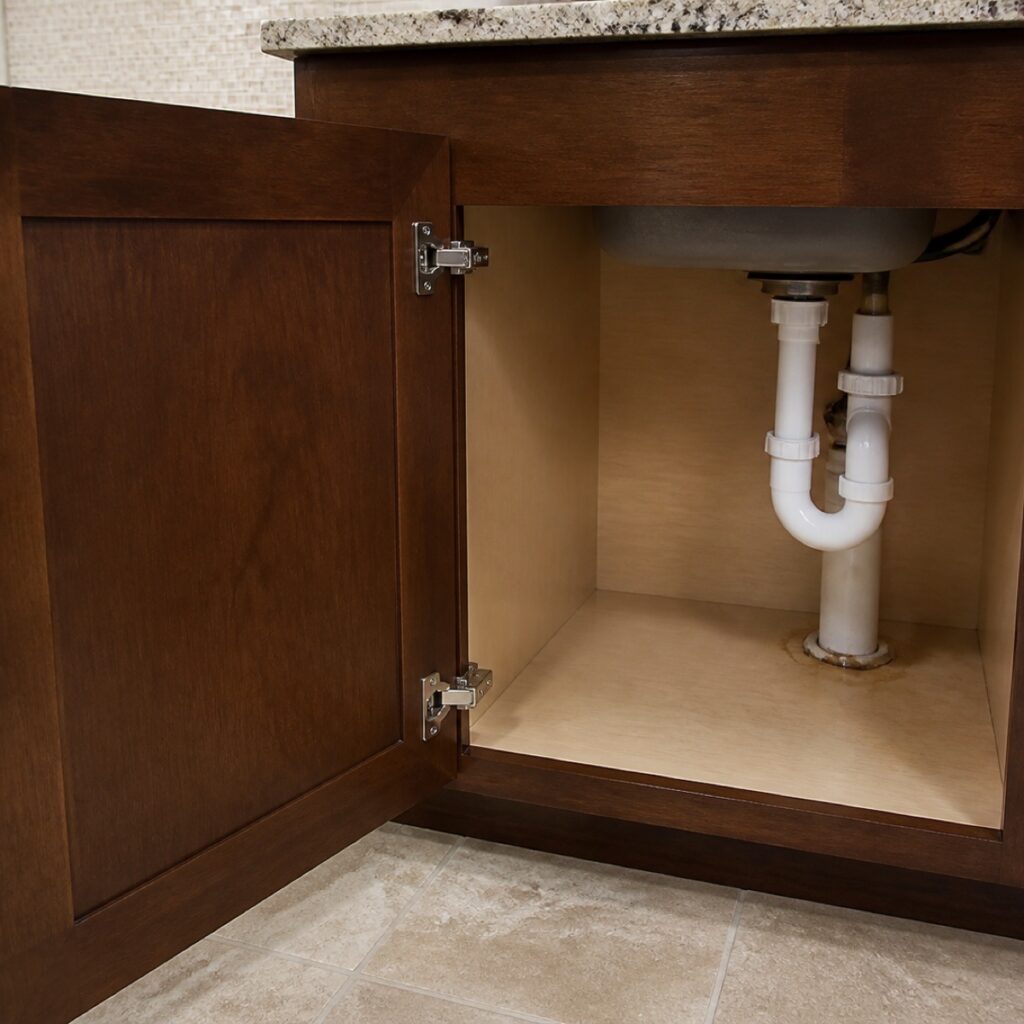
Water-damaged kitchen cabinets can sometimes be painted after a sink leak, but only when the leak is fixed and the cabinet material is still dry, solid, and securely bonded. Paint can renew a sound cabinet surface. It cannot restore a swollen particleboard floor, crumbling panel edge, separated veneer, active mold growth, or a box that has lost its shape.
A slow sink leak is easy to underestimate because the first visible sign may be a faint ring around a pipe or a door that suddenly looks uneven. Behind that small clue, moisture may have affected only a removable cabinet floor panel—or it may have traveled into the sides, back, toe kick, and neighboring boxes. The right cabinet plan begins by separating a finish problem from a material problem.
What should happen before water-damaged cabinets are painted?
The water source must be corrected first. Then the cabinet needs enough time to dry so its condition can be judged honestly. A finish estimate made while material is still damp can hide the difference between temporary swelling and permanent loss of strength.
ColorUp evaluates the visible cabinet surfaces, panel edges, joints, fasteners, door alignment, and adjacent boxes before recommending a finish scope. When plumbing, mold remediation, or structural carpentry falls outside cabinet finishing, that work should be handled by the appropriate qualified trade before coating begins. The homeowner’s role is not to diagnose or prepare the cabinets; clear photos and access to the affected area help the project team determine what needs a closer look.
The practical rule
If the cabinet is dry, stable, and holding its shape, refinishing may remain an option. If the substrate is soft, swollen, separating, or no longer supporting hardware correctly, damaged material should be repaired or replaced before any finish is considered.
How to tell a finish issue from cabinet-box damage
Not every stain means the cabinet box has failed, and not every clean-looking surface is sound. The condition of the material matters more than how dramatic the mark appears.
| What the inspection finds | What it may mean for the plan |
|---|---|
| A dry water mark with firm, flat material | The surface may be cleanable, repairable, and suitable for a properly specified coating after the cause is resolved. |
| Minor damage limited to a removable sink-base floor | A localized repair may preserve the rest of the cabinet box, depending on how the cabinet was built. |
| Lifted veneer or an exposed edge that remains solid | The damaged area needs a repair decision before the finishing system is specified. |
| Swollen particleboard, softness, crumbling, or separated layers | Paint is not a structural repair; affected components may need replacement. |
| Doors no longer align or the box has moved out of square | The inspection should extend beyond the visible stain to joints, supports, and neighboring cabinets. |
| Persistent moisture, odor, or suspected microbial growth | The source and environmental condition should be professionally addressed before cabinet finishing proceeds. |
Why painting over swollen cabinet material fails
Cabinet coatings are designed to bond to a suitable substrate. They do not compress expanded fibers back into their original shape or reconnect layers that have separated. A swollen edge can also telegraph through the finish, leaving a ridge or fuzzy profile even when the color looks uniform from a distance.
The problem is especially important with manufactured panels. Once the core has absorbed enough water to lose density, sanding or filling the surface does not recreate the original structure. Covering that weakness with an opaque finish may make the area look improved temporarily while the underlying material continues to move or break down.
That is why a responsible proposal should describe which parts are being finished, which localized repairs are included, and which damaged components need separate replacement. The scope should not use paint as a shortcut around condition.
Does one damaged sink cabinet mean the whole kitchen needs replacement?
No. A localized leak does not automatically require replacing every cabinet. The answer depends on how far the moisture traveled, whether the affected cabinet shares finished panels or supports with neighboring boxes, and whether the existing layout and doors are otherwise worth keeping.
When the damage is contained, the plan may involve a localized cabinet repair followed by coordinated refinishing. If the cabinet boxes are broadly sound but the doors or visible surfaces no longer suit the kitchen, cabinet refacing may change the door style while retaining appropriate existing structure. If moisture has compromised multiple boxes, supports, or the layout itself, replacement deserves a more serious comparison.
The useful question is not simply “Can this be painted?” It is “Which material is still dependable, and which work creates a durable, coherent result?”
How ColorUp scopes cabinets after a sink leak
The first conversation can begin with photos of the full sink cabinet, the cabinet floor, both side panels, the toe-kick area, and the neighboring doors. Those images help identify whether an on-site condition review should precede the finish estimate.
During the scope review, ColorUp separates four decisions:
- Source: Is the leak corrected, and is the area ready to be evaluated?
- Condition: Which components remain dry, flat, firmly bonded, and structurally useful?
- Repair responsibility: What cabinet-related repair belongs in the scope, and what requires a plumber, remediation professional, or carpenter?
- Finish path: After the cabinet is made sound, does cabinet painting, refinishing, refacing, or replacement best fit the kitchen?
This sequence protects the finish decision from becoming a cosmetic guess. It also gives Greater Houston homeowners a clearer comparison between preserving sound cabinetry and replacing material that no longer deserves another coating.
Questions to ask before approving the cabinet scope
A useful written proposal should make the affected area easy to understand. Look for a clear description of what stays, what is repaired or replaced, which visible surfaces receive finish, and which related trades are excluded or coordinated separately. It should also explain how a repaired sink base will visually connect with the rest of the kitchen.
If countertops or the sink must move as part of a larger repair, coordinate that decision before the cabinet finish schedule is finalized. Color, edge profiles, plumbing access, and protection of finished surfaces can all affect the order of work. ColorUp’s countertop services can be considered as part of the same design conversation when a surface change is genuinely needed.
Not sure whether the sink cabinet is still worth keeping?
Send photos of the affected area and request a ColorUp project estimate. We will help separate the repair decision from the finish decision before the scope is written.
Request a Cabinet EstimateFrequently asked questions
Can you paint cabinets that had a small plumbing leak?
Sometimes. The leak must be fixed, the cabinet must be dry, and the material must remain firm and stable. A stain alone may not disqualify the cabinet, but swelling, softness, separation, or loss of shape changes the repair plan.
Can primer seal water damage in a cabinet?
Primer can help manage certain stains and create adhesion on an appropriate surface. It cannot restore weakened, swollen, or delaminated cabinet material. The substrate has to be suitable before a primer or finish system is selected.
Should the sink-base cabinet be replaced if only the floor is damaged?
Not always. Some sink-base floors can be repaired or replaced locally, depending on cabinet construction and the condition of the sides, back, supports, and toe kick. The repair should be evaluated before the cabinet is included in a refinishing scope.
Will cabinet paint hide a swollen edge?
No durable finish plan should rely on paint to hide a swollen edge. Expanded or fuzzy material can remain visible through the coating and may continue to deteriorate. The damaged edge needs a repair or replacement decision first.
Who should fix the leak before cabinet refinishing?
A qualified plumbing professional should correct plumbing problems. If there is suspected mold or broader moisture damage, the appropriate remediation or building professional should address it. Cabinet finishing should begin only after those conditions are resolved and the cabinet scope is confirmed.