Kitchen planning guide · Greater Houston
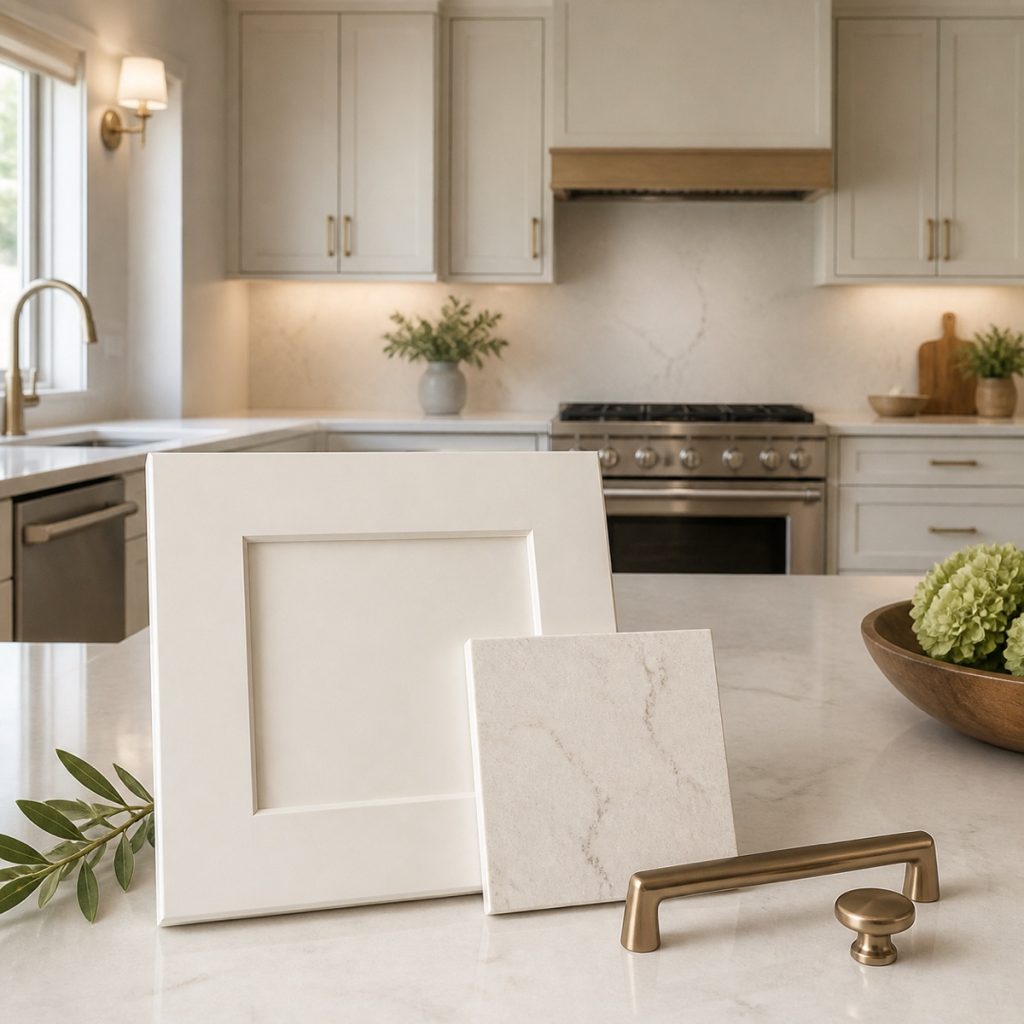
Cabinet color and countertops should be selected as one composition because they occupy more visual space than almost anything else in the kitchen. Decide what is staying, choose which surface will lead the design, and compare large samples together in the room’s actual light before approving either finish.
Why cabinet color and countertops belong in the same conversation
A cabinet door sample and a countertop chip can both look attractive on their own. The difficulty appears when those small pieces become full rooms. Cabinetry usually covers several walls, while the countertop creates long horizontal fields across the perimeter and island. Their undertones, sheen, pattern, and contrast influence each other everywhere they meet.
A warm white cabinet can appear calm beside a stone with cream or taupe undertones, yet look unexpectedly yellow beside a cooler gray surface. A quartzite or quartz pattern with strong movement can become the kitchen’s focal point; pairing it with an equally assertive cabinet color and a busy backsplash may leave the room without a place for the eye to rest.
The practical rule
Choose one main visual voice. Let the other large surfaces support it. A balanced kitchen can still have contrast—it simply does not ask every material to be the centerpiece.
Start with the surfaces that are staying
Before looking at new colors, identify the fixed materials. Flooring, backsplash, wall color, appliances, and nearby woodwork may all remain after the cabinet and countertop work is finished. Those elements form the color context for every new decision.
If the existing floor has a strong warm or red undertone, a very cool cabinet gray can emphasize the difference. If the backsplash is staying and already contains several colors, a quieter countertop may connect the room more successfully than another patterned surface. Stainless appliances are relatively flexible, but black, white, bronze, or paneled appliances can carry more visual weight.
Photograph the kitchen in daylight and again under the lighting used at dinner. Those photos help document how the fixed surfaces change during the day. In many Greater Houston homes, strong window light can wash out subtle undertones at noon while warm interior lighting reveals them at night.
Choose whether cabinets or stone will lead the design
When the countertop leads
- Dramatic veining or strong natural movement
- A statement island or full-height slab backsplash
- Cabinet color kept calmer and more supportive
- Hardware chosen to complement, not compete
When the cabinets lead
- Charcoal, navy, green, or a distinct wood finish
- A two-tone cabinet plan with intentional contrast
- Countertop pattern kept quieter
- Backsplash used as a bridge between surfaces
Neither approach is automatically better. The right choice depends on what you want to notice first when entering the room. If a particular slab is the reason the project feels special, give it space. If the cabinet transformation is the priority, select stone that supports that finish instead of distracting from it.
Compare undertones, pattern, and sheen—not just color names
Undertones
Labels such as “white,” “greige,” or “gray” are only a starting point. Two whites may lean cream, green, pink, blue, or gray. Place the cabinet sample against the actual countertop sample, backsplash, and floor. A combination that looks neutral under showroom lighting may behave differently in the kitchen.
Pattern and movement
A small countertop chip cannot show how veining travels across a long run or around an island. View the largest sample available and, for natural stone, inspect the full slab when possible. Look for the overall rhythm, not only the prettiest six-inch section. Ask how seams, sink cutouts, corners, and backsplash pieces will affect the visible pattern.
Sheen and reflection
Cabinet sheen changes how light moves across doors, while polished and honed countertops reflect the room differently. More reflection can brighten a space, but it can also make texture and strong veining more noticeable. Review samples vertically and horizontally because cabinet doors and counters catch light from different angles.
A practical planning sequence for cabinets and countertops
The homeowner’s decision sequence
- List the flooring, backsplash, appliances, and adjacent finishes that will remain.
- Decide whether the cabinet finish or countertop should be the visual lead.
- Compare large cabinet and countertop samples beside the fixed surfaces.
- Review the combination in morning, afternoon, and evening light.
- Confirm hardware, backsplash, sink, faucet, and edge details only after the two main surfaces agree.
- Approve a written scope that identifies which trade is responsible for each part of the work.
This sequence keeps the homeowner focused on design decisions while the professionals manage production. ColorUp handles the cabinet scope, including the documented removal, preparation, finishing, and reinstallation process. Countertop measurement, fabrication, plumbing, and electrical responsibilities should be clearly assigned to the appropriate trade partners before work begins.
For more detail on the available paths, review ColorUp’s cabinet painting service, cabinet refacing options, and countertop planning.
Questions homeowners ask about cabinet and countertop planning
Should cabinets or countertops be selected first?
Select the surface with the strongest design constraint first. A distinctive stone slab may lead the palette, while an existing cabinet finish or a specific cabinet color may make the countertop the supporting choice. The important step is comparing them before either order is final.
Can I keep my existing countertops when painting the cabinets?
Often, yes—if the countertops are in suitable condition and their color works with the planned cabinet finish. Existing surfaces should be protected during the cabinet process. The estimate should clarify protection, access, exclusions, and any concerns at seams or edges.
Do cabinet whites need to match the countertop background exactly?
No. An exact match can make a room feel flat, and natural materials rarely match perfectly. The undertones should relate intentionally. A warm cabinet white can work with a slightly different warm stone as long as the combination feels connected rather than accidental.
When should the backsplash be chosen?
Usually after the cabinet finish and countertop direction are established. The backsplash connects those two large surfaces, so choosing it too early can create another fixed color that the rest of the design must work around.
How can I begin without visiting a showroom first?
Start with wide photos of the kitchen plus close photos of the cabinet doors, countertops, backsplash, flooring, and any damage. Those images help clarify whether painting, refacing, countertop work, or a broader scope deserves the first conversation.
Plan the cabinet finish and countertops as one room
Send ColorUp a few kitchen photos. We’ll help you identify what is staying, what should lead the design, and which cabinet or countertop path fits the result you want.
Request an estimate