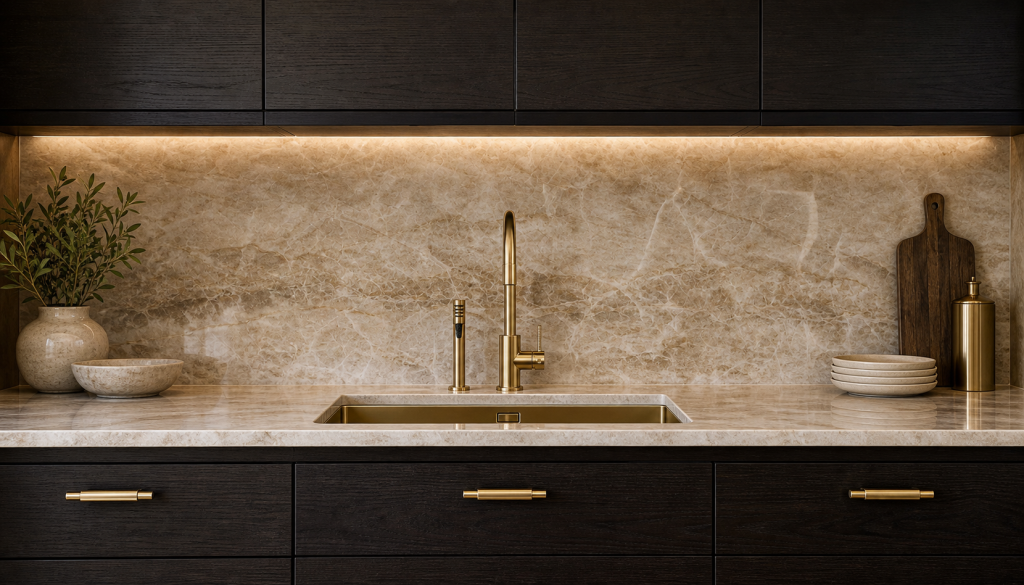
Quartz vs Granite vs Marble Countertops: 2026 Houston Pricing & Honest Comparison
91% of Houston homeowners who renovate upgrade their countertops. Here’s exactly what each material costs, how it holds up, and which one actually pays off at resale.
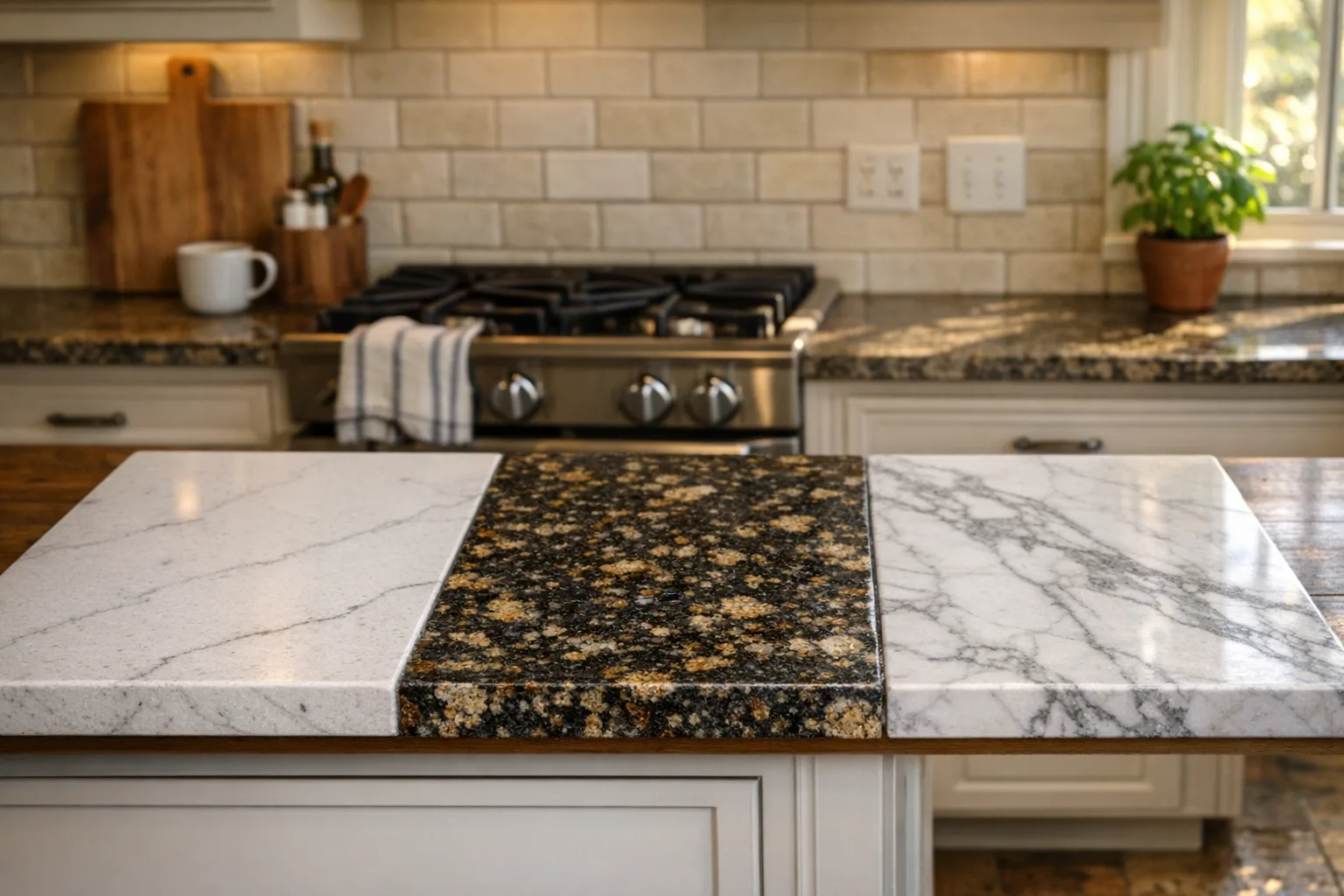
What Houston Homeowners Are Actually Spending on Countertops in 2026
Countertop replacement is the single most common kitchen upgrade in America right now. According to 2026 Houzz data, 91% of homeowners who renovate their kitchens upgrade their countertops. That’s nearly every renovation project.
The price range is wide. You can spend $50 per square foot or $250. The material you pick drives that number more than almost anything else.
Here’s the 2026 installed cost breakdown for Houston homeowners — including material, fabrication, and standard installation.
For a typical 35–40 sq ft Houston kitchen, that puts your total installed cost at roughly $2,600–$5,800 for quartz, $2,300–$5,400 for granite, and $3,300–$8,000 for marble. Larger kitchens in River Oaks or The Woodlands with islands and butler’s pantries can push well past those numbers.
Houston has dozens of independent stone yards in areas like Stafford, Katy, and the Northwest Freeway corridor. Buying direct from a slab yard instead of a big-box store can save 15–30% on the same material. Always ask to see your actual slab before fabrication begins.
Durability Head-to-Head: Heat, Stains, and Everyday Beating
Every countertop material has a different tolerance for the things kitchens actually throw at them. Hot pans, red wine, raw chicken, acidic tomato sauce — let’s go through each one honestly.
| Category | Quartz | Granite | Marble |
|---|---|---|---|
| Heat Resistance | ⚠️ Poor — resins warp above 150°F | ✅ Good — handles brief hot pan contact | ✅ Good — thermally stable, but avoid shock |
| Stain Resistance | ✅ Excellent — non-porous surface | ⚠️ Moderate — porous if unsealed | ❌ Poor — etches from acids like lemon juice |
| Scratch Resistance | ✅ Very good — rates 7/10 on Mohs scale | ✅ Excellent — rates 6–7/10 on Mohs scale | ❌ Soft — rates 3–4/10, scratches easily |
| Bacterial Resistance | ✅ Excellent — non-porous, nothing penetrates | ⚠️ Depends on sealing schedule | ⚠️ Depends on sealing schedule |
| Maintenance Level | Low — clean with soap and water | Medium — seal every 12–18 months | High — seal frequently, avoid all acids |
The biggest surprise for most Houston homeowners: quartz cannot handle a hot pan. The resin binders that make quartz non-porous also make it heat-sensitive. Always use a trivet. Granite and marble are the better choice if you frequently move pots straight from the stove to the counter.
How Houston Humidity Changes the Sealing Game for Natural Stone
Houston averages over 65% relative humidity for much of the year. That matters more than most homeowners realize when it comes to granite and marble maintenance.
Sealant breaks down faster in humid climates. In dry cities like Phoenix or Denver, granite sealant might hold for 3–5 years. In Houston, you’re looking at 12–18 months before resealing is needed — sometimes less in kitchens with poor ventilation.
Pour a small amount of water on your granite or marble. If it beads up and sits on the surface, your seal is holding. If the water absorbs and darkens the stone within 2–3 minutes, reseal immediately. In Houston, most granite slabs fail this test after 12–15 months of normal use.
Marble is even more sensitive. Beyond sealant breakdown, marble etches — meaning the surface itself reacts chemically with acidic substances like citrus juice, vinegar, and wine. Etching is not a stain. It cannot be wiped away. It requires professional polishing to remove.
Quartz sidesteps all of this. Its non-porous surface is immune to humidity-driven absorption issues. That’s a genuine practical advantage for Houston homeowners, not a marketing claim.
ROI at Resale: Which Countertop Material Pays Off in Houston
Not all countertop upgrades return the same value when you sell. The Houston market has its own preferences, and they don’t always match national averages.
Quartz consistently delivers the best return in Houston’s mid-range market — homes priced $300K–$600K in neighborhoods like Cypress, Pearland, and Sugar Land. Buyers in this bracket recognize quartz and associate it with quality.
Updating Your Countertops? Your Cabinets Might Need Attention Too.
New countertops next to worn or dated cabinets is one of the most common design mismatches we see in Houston homes. ColorUp Cabinets can refinish your cabinets to match your new countertop direction — without the cost of replacement.
Get My Free Estimate Text Us NowFrequently Asked Questions
Is quartz or granite better for a Houston kitchen?
For most Houston households, quartz wins on practicality. It never needs sealing, resists the humidity-driven staining issues that plague unsealed granite, and holds up well to the heavy daily use of a family kitchen. Granite is a great choice if you love natural stone character and are committed to sealing it every 1–2 years — which Houston’s humidity makes non-negotiable.
How much do quartz countertops cost installed in Houston in 2026?
Installed quartz in Houston runs $75–$145 per square foot in 2026, depending on the brand, thickness, and edge profile. A typical 35–40 sq ft kitchen countertop comes out to $2,600–$5,800 all-in. Premium brands like Calacatta Gold quartz push toward the higher end. Always get at least three quotes from Houston slab yards — prices vary more than most homeowners expect.
Does granite need to be sealed every year in Houston?
In Houston’s climate, yes — most granite should be sealed every 12–18 months, sometimes more. High humidity accelerates the breakdown of sealant, and porous granite left unsealed absorbs oils, wine, and bacteria quickly. A simple water bead test tells you when it’s time: if water soaks in instead of beading up within a few minutes, reseal immediately.
Can you put hot pans on quartz countertops?
No — and this is one of quartz’s biggest limitations. Quartz contains polymer resins that can discolor, crack, or warp under direct heat above 150°F. Always use a trivet or hot pad. Granite handles heat much better and can generally tolerate a hot pan briefly. Marble is thermally stable but susceptible to thermal shock if you go from very cold to very hot.
Which countertop material has the best resale value in Houston?
Quartz consistently delivers the strongest resale performance in Houston’s market, with studies showing 80–100% cost recoup on mid-range quartz installs. Granite performs well in homes priced $400K+, where buyers expect natural stone. Marble adds perceived luxury in high-end listings but rarely recoups its full cost in average Houston neighborhoods due to its high maintenance reputation.
Are rounded countertop edges more expensive?
Yes, but not dramatically so. A standard eased or beveled edge is usually included in base installation pricing. Rounded profiles like a full bullnose or ogee edge add roughly $10–$25 per linear foot, depending on the material and fabricator. Quartz and granite can both be shaped into virtually any edge profile. Marble is softer and easier to carve, but chips at rounded edges more easily over time.